Norm (summarized)
Legal Basis:
Norms:
SN EN 50678: “General procedure for verifying the effectiveness of protective measures for electrical devices after repair”
SN EN 50699: “Periodic inspection of electrical appliances”
Why it is important:
Where does it apply:
It applies to all machinery with connector or with a permanent connection, except:
- UPS: Uninterruptible Power Supplies
- PLCs: Programmable Logic Circuits
- EVs: Electric Vehicle Charging Stations
- Power drives
- Power Supplies
- Machinery for explosive zones (EX)
- Fixed electrical installations: ND 60364-6
- Medical products: EN 60601-1
(
 ,
,
 ,
,
 )
)
- Arc welding machines EN 60974-4
- Industrial plants: EN 60204-1
Protection classes:
| Class: | Marking or Instructions: | Conditions for connection: |
|---|---|---|
| 0 | Only for use in a non-conductive environment; or protected by electrical separation | Non-conductive environment. Electrical separation ensured individually for each electrical component |
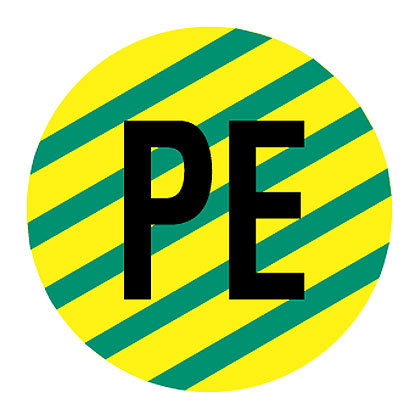
| 1 | Marking of the protective connection terminal with the symbol n.5019 of IEC 60417-2, the letters PE, or the yellow-green color combination.
|
Connect this terminal to the equipotential bonding of the system. |
| 2 | Marking with the symbol n.5172 of IEC 60417-2 (double framework)
|
No reliance on plant protection measures |
| 2(+1) | Marking with the symbol n.6092 of IEC 60417-2 (double framework) |
It's a class 2, grounded. You perform class 2 measurements and check the RPE. |
| 3 | Marking with the symbol n.5180 of IEC 60417-2 (Roman numeral III in a diamond) |
Connect only to SELV* or PELV* systems. These are very rare devices. |
*SELV (Safety Extra Low Voltage), if the electrical system is isolated from earth); AC<50V / DC<120V
*PELV (Protective Extra Low Voltage), if the system has a grounded point; AC<50V / DC<120V
Measurement equipment:
Only measuring devices in accordance with SN EN 61010-1, SN EN 61010-2-030, SN EN 61010-2-032 or SN EN61557-16 are permitted.
These should be calibrated and checked in accordance with the manufacturer's instructions.
How often:
Following maintenance and periodically. For schools, the recommended checkup is every 12-24 months.
The choice of inspection frequency is a personal responsibility, and could be defined dynamically you notice a problem by an educated person.
Note: For devices that are not exposed to mechanical stress or harmful influences (e.g. monitors, PCs, printers, entertainment electronics) a periodic inspection can be dispensed with.
Note: In the case of RCDs ("residual current devices" also commonly referred to as "earth leakage circuit breakers"), which are an integral part of the operating equipment, a test key check is generally sufficient.
How to check:
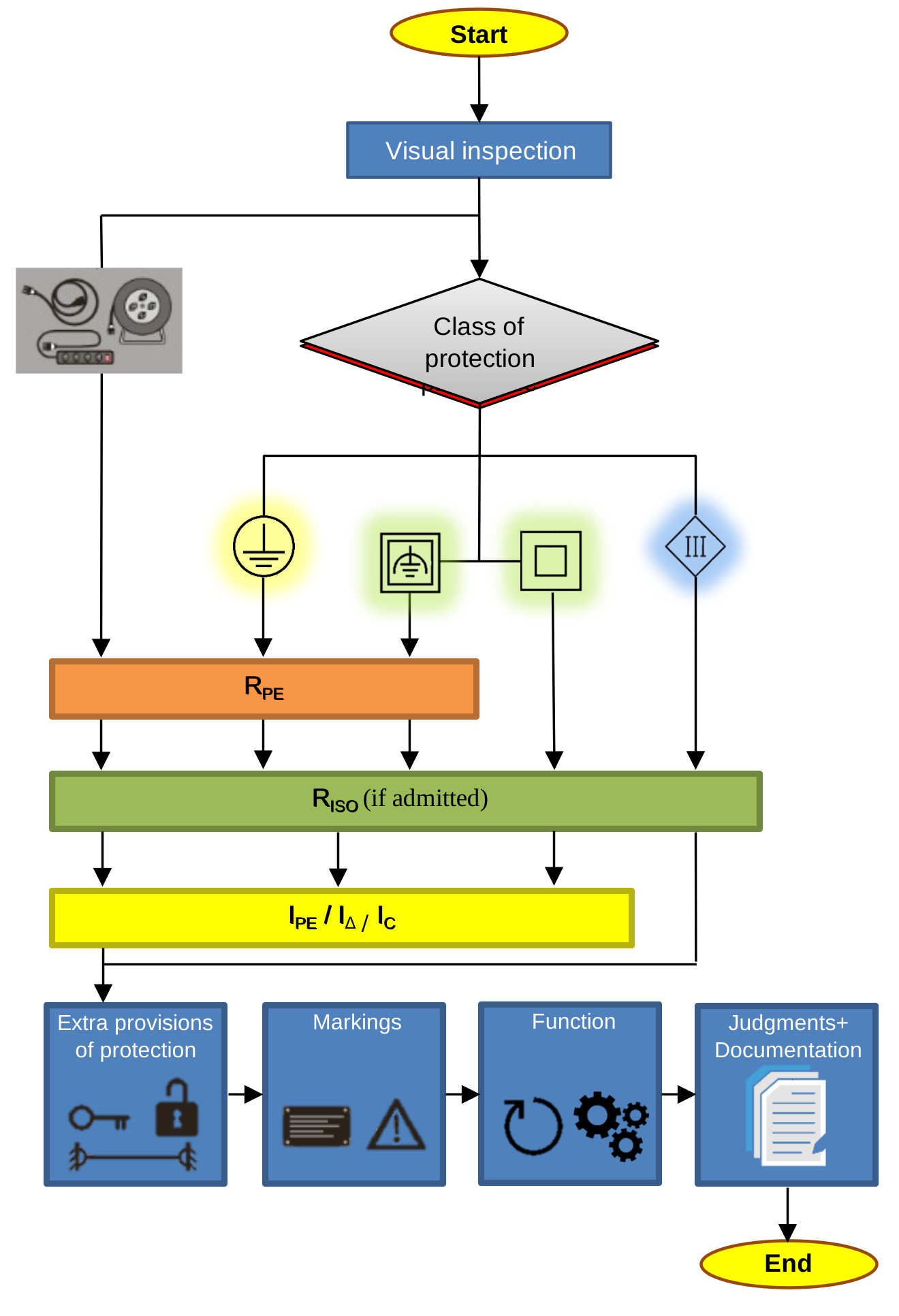
Summarized in the following diagram:
Visual Control:
Externally visible faults and suitability for the type of use. Si cercano difetti che possono compromettere la sicurezza elettrica accessibili al utente o all’ambiente con l’uso previsto degli apparecchi.
- There is damage, is dirt, signs of corrosion especially in the protective elements?
- Presence of oxides in the sockets or is the cable damaged?
- Does the instrumentation look intact?
- Condition of attachment points?
- Signs of overload, heating, or misuse?
- Signs of intervention or modifications not consented to?
- Condition of air filters?
- Condition of the pressure relief valves?
- Readability of all wording or all symbols necessary for security?
- Selection and use of compliant cables and plugs?
- Hermeticity?
- Markings?
Grounding check: RPE
0.3Ω up to 5 meters, and every 7.5 meters 0.1Ω more up to a maximum of 1Ω for each accessible part connected to the protective conductor.
The following table follows:
| Distance: | Impedance |
|---|---|
| up to 5 meters | ≤ 0.3Ω |
| up to 12.5 meters | ≤ 0.4Ω |
| up to 20 meters | ≤ 0.5Ω |
| up to 27.5 meters | ≤ 0.6Ω |
| up to 35 meters | ≤ 0.7Ω |
| up to 42.5 meters | ≤ 0.8Ω |
| up to 50 meters | ≤ 0.9Ω |
| more than 50 meters | ≤ 1.0Ω |
Note: Indirectly connected components (e.g., mechanical structural elements) may have higher values. On these components, compliance with safety requirements is demonstrated by measuring the contact current.
Isolation Control: RISO
Measurement with 500VDC@1mA
Class 1: At least 1MΩ; and 0.3MΩ per 1kW for heating elements.
Class 2: At least 2MΩ
Class 3: Only after repair, at least 0.25MΩ
Note: For class 1 heating elements with an output > 3.5kW, do not meet the insulation resistance limit values, the test is passed if the protective conductor current (leakage current) limit values are not exceeded.
Note: For Class 1 heating elements with an output > 3.5kW, if the leakage current check is met, they pass the check even if the RISO is not met.
Note: If the equipment may be damaged, is delicate, or has special safety systems, this test can be ignored or performed with 250VDC.
Note: For elements with an input filter or SELV/PELV, the test voltage can be reduced to 250VDC.
Note: Measurements shall be made for all switch positions.
Nota: Apaprecipients with supply voltage <25VAC andgt;60VDC should not be checked.
Nota: If the measured value of the isolation current does not meet the limit values, reasons must be given.
Nota: All switches, regulators, etc., should be closed during the measurement so that the insulation of all active parts is fully detected. If necessary, perform measurements at all positions.
Leakage current control: IΔ
Class 1: In general, it should not be superior to 3.5mA. For heating equipment, 1mA/kW (up to a maximum of 10mA) can be calculated.
Class 2: maximum 0.5mA
Nota: If the accessible conductive parts with various potentials are arranged so that they can be touched together with one hand, the domma of contact currents should be considered the measured value.
Contact current control: IC
The contact current must be measured on every accessible conductive part that is not connected to a protective conductor of the device. The maximum permissible current is 0.5mA. For SELV and PELV devices, the contact current measurement can be ignored.
Other controls:
For extension cords, and power strips, you must check that the wiring polarity is correct.
Labeling:
The check is passed when all individual checks have been passed. The tested device must be marked.
Checks must be documented (electronically possible).
Image with example labels with QR code and CODE128.
For simpler electrical service equipment, such as extension cables, cable reels and the like, documentation by means of a test plate is usually sufficient.Periodicity:
Appliances should be checked periodically, taking into account the richness factor. As a guide, these are the recommended parameters:
| Installation location | Months | |||
|---|---|---|---|---|
| 6-12 | 12-24 | 24-36 | 60 | |
| External construction sites | X | |||
| Internal construction sites | X | |||
| Theaters, provisional stages, event facilities | X | |||
| Workshops, restaurants, hotels | X | |||
| Industries, carpentries, abattoirs, auto repair shops | X | |||
| Companies (solicitation reduced) | X | |||
| Schools, kindergartens, warehouses, commercial areas | X | |||
| Office | X1 | X2 | ||
2 – Appliances used infrequently (less than 1 time per month) or with non-accessible conductive parts.
| Degree of stress | Months | |||
|---|---|---|---|---|
| 6-12 | 12-24 | 24-36 | 60 | |
| Not protected from weather | X | |||
| Extremely cold | X | |||
| Water splash | X | |||
| Water flooded | X | |||
| Abrasives, solvents, acids | X | |||
| A lot of dust | X | |||
| Average mechanical stress | X | |||
| Strong mechanical stress | X | |||
| Direct solar irradiation | X | |||
Note: For equipment that is not exposed to mechanical stress or harmful influences, a periodic inspection can be dispensed with (e.g. monitors, PCs, printers, entertainment electronics).
Note: If more than one condition applies to the use of an appliance, unpick the shortest period.